Here I explore the themes that matter to me and that arise in my work with clients: relationships, psychology, philosophy, aliveness, self-awareness, and the inner life. My writing is inspired by my own 45 years of life experience, accumulated knowledge, and, importantly, from seeing clients over the past 18 years.
Much of this writing also exists as video essays on my YouTube channel, where the same ideas are paired with nature footage and narration in my own voice. You can find the full channel here: https://www.youtube.com/@themetaforest
Recent series:
The Subtle Art of Taking It Personally explores how we interpret and react to other people’s behavior, and what those reactions reveal about our own psychology, wounds, and defenses.
Three Pillars of a Nourishing Relationship examines what makes intimate relationships nourishing versus depleting: hard work together, compatibility, and individual healing.
-

How Long Should Hard Emotions Last? (Part 1) — The Two Arrows
How long should hard emotions last? In 18 years of practice, almost every client has asked me some version of that question, though usually not directly. Sometimes it sounds like “I feel my pain all the time, I should be feeling less of it, not more.” Sometimes it’s “I don’t really do the feels.” My answer begins with the Buddhist parable of the two arrows. The first arrow is the pain life shoots at us, big or small. The second arrow is the one we shoot at ourselves, trying not to feel the first. Second arrows can be cognitive, somatic,…
-
Why Couples Stop Cooperating — The Stag Hunt
What is the force that pulls people in relationships toward the familiar stance, “I can only depend on myself”? A couple says they want to be together. And when they’re cooperating, they genuinely do, and they accomplish great things together with an aura of love and synergistic harmony. But when they get sufficiently scared, there’s a strong impulse to withdraw…to retreat…to “go it alone” — whether that refers to a particular goal they can’t agree on, or to their entire relationship — their goal of enjoying life together. Even when one partner is critical and blaming, and appears to be…
-

Defensive Judgment Vs Wise Discernment
“Don’t judge me.” “You’re being judgmental.” “This is a judgment-free zone.” We bristle at the word “judgment” and being judgmental, because we intuitively and reflexively sense real danger there. But in truth, every day we’re continuously making decisions and distinctions in order to live the lives that we want. X is better than Y. We choose this and not that. We let someone in, and keep another out. What really IS the difference between harmful/immoral/defensive judgment vs squarely looking at reality in order to decide what we include and what we exclude based on qualities that we determine are good…
-

The Drama Triangle: A Cocoon of Moral Certainty
It’s in our primal human nature to perceive conflict in terms of an archetypal meta-story with a victim, a villain, and a hero. This can make for an entertaining movie but, usually, seeing the real world in this way limits our growth, connection, and freedom by turning each other into dehumanizing caricatures and escalating conflict. Fast moral certainty comes with a high price tag. Psychologist Stephen Karpman named this pattern “the drama triangle”, and we’re so used to it that it feels normal and even inescapable. It shows up at every level of human relating, from the family to public…
-
The Blind Spot That Keeps Conflict Alive
This basic question is, in my experience, central to almost all psychotherapy: “How much of this interpersonal problem is ‘my stuff’ and how much of it is ‘their stuff’ and how much is ‘our stuff’?” The same basic question from another angle: “how much of what I’m experiencing (perceiving, thinking, feeling, saying, doing) is because of the present reality in front of me, and how much of what I’m experiencing is because of my past conditioning?” We’re hardwired for continuous and responsive feedback exchange with each other, and at the same time we’re separate bodies and minds with personality tendencies…
-
Circular Causality Blindness In Intimate Relationships
The more enduring and substantive the history between two people, the more personal their behavior toward each other will be. So where better to practice the subtle art of taking it personally than in marriages and intimate relationships? A couple’s mutual awareness of the circular causality between them can make the difference between a status quo stalemate for years and empathy that yields intimacy dividends for decades. Relationship problems can largely be explained by circular causality blindness, which leads to blame and resignation rather than accountability and effort. We tend to underestimate how much our own behavior shapes a partner’s…
-

The Myth Of Pure Evil And Circular Causality Blindness
When relationships are going well, we credit good intentions and enjoy the sweetness of harmony. But in conflict, we tell stories of “good vs evil” that erase shared responsibility. Between individuals and groups, there exists a human proclivity to make our side righteous and the other side wicked, because doing so is more comfortable than listening, empathizing, and compromising. Psychologist Roy Baumeister calls this “the myth of pure evil”. It’s the psychology behind polarization, tribalism, and conflict escalation. It allows harmful behavior to insidiously masquerade as virtue under the auspices of fighting evil. The myth of pure evil is not…
-

Circle Eye Blind: Semi-Concealed Side Of Strife
Circular causality blindness” is what I call the psychological blind spot that causes us to selectively attribute others’ behavior as a situational cause for our own, while simultaneously discounting how our actions act as a trigger for their behavior. Each partner or party within a system sees their own reactions as justified responses to the behavior of others. Two sides hold mirror-image half-truths, each convinced they’re merely reacting, rather than co-creating a mutually unsatisfying or destructive loop. This video explains how, due to various cognitive biases, we often give up on relationship problems, or make them worse with “solutions” that…
-

Significance Shadows And Influence Illusions
Why do we have opposite tendencies to feel invisible and insignificant on one hand, and other times experience the “spotlight effect”, overestimating how much others are paying attention to us? Why do we oscillate between overestimating and underestimating our importance to others, and what do these misjudgements depend on? How can developmental and evolutionary psychology shed light on the disconnect between the perception vs the reality of how much or how little attention is turned our way? I share a few thoughts on these questions in this video.
-

Echoes Of Steps Inevitably Intersect
The longer I live, the more I perceive how interconnected I am with the rest of life on the planet. Noticing this can be at once frightening and liberating, depending perhaps on our current appetites for control vs acceptance. What influence can “little old me” possibly have, when it is placed next to that of infinite creation? Are we master and commander of our ship, restrained only by the limits of our imagination and determination? Or are we passengers of fate in a vehicle steered by the hands of God, exempt from any task other than steadfast surrender? What is…
-

Taking It Circularly (The Subtle Art Of Taking It Personally 2.1)
A continuation of my essay on relationship dynamics that I’ve called “The subtle art of taking it personally”. In this section I introduce some questions I’ll be exploring, and the concept of “circular causality”, a useful term from the field of marriage and family therapy that, once seen, cannot be unseen (at least in my experience). The next several videos will go into more detail on circular causality (the way we continuously and dynamically impact and influence one another), how and why circular causality is often not perceived from our subjective points of view, and the resulting consequences of that…
-

The subtle art of taking it personally (part 1): Who do we think we are?
You may have heard the advice, “don’t take anything personally”. And what’s not to like about the idea that other people’s challenging behavior has nothing to do with us and is all “about them”? But… is it true? If so, would that not also infer that all of our actions are only “about us” and have nothing to do with what other people do in our midst? What does “taking something personally” actually mean? And for that matter, what does “personal” mean? (This may not be as obvious as it sounds). How much of human behavior is about the characteristics…
-
Three pillars of a nourishing relationship (part 3): individual healing
In a relationship, it’s easy to attribute the pain of our individual wounds to a partner. They say something hurtful, and we hurt. They leave, and we feel lonely. They smother us, and we feel trapped. It’s just an obvious case of cause and effect, right? What more to it could there be? That’s what we think, at least, until we break up and, months later, are still feeling similar hurt, loneliness, suffocation, or whatever else we were feeling when they were around. Only this time they aren’t around to attribute it to. That can motivate us to look inward…
-

Three pillars of a nourishing relationship (part 2): compatibility
I like the idea that anyone can love anyone, regardless of their life conditioning and their genetic attributes. And technically I think that’s true. I believe that at a soul level, we are all the same consciousness, so loving any other being is like loving ourselves. But loving someone isn’t the same as having a relationship with them. Love isn’t transactional, but relationships are, even if those transactions aren’t kept track of (which are the best kind of transactions for intimacy). Love and relationship are related, but not the same. Some kinds of relationships like family, friendship, and intimate partnership…
-
Three pillars of a nourishing relationship (part 1): hard work together
What makes a relationship work? It’s a pretty important question. If we knew the answer — really knew it — and believed it in our bones — it might go a long way toward influencing who we select, how we prepare when single, and how we show up in relationships. Most people want a healthy, nourishing romantic and intimate relationship. But I think there’s a lot of warranted confusion around what will get us there, because the answer isn’t simple. When I was younger, I didn’t choose partners or show up in relationships all that consciously, which is fairly typical. …
-

Cold water immersion in nature: a therapist’s experience and reflections (Part 3)
This post is the text of a video essay that I made. For most people, I would recommend watching/listening to the video instead of reading the post: The River Eventually I wound up moving, so my access to the lake became a rare occurrence. But there was a river nearby where I went. It took longer to get to, so I went less often, but it became my new practice spot. In the fall, the flow was so low that I had to lie down totally flat on rocks and would stand up with silt and debris on my skin. …
-
Cold water immersion in nature: a therapist’s experience and reflections (Part 2)
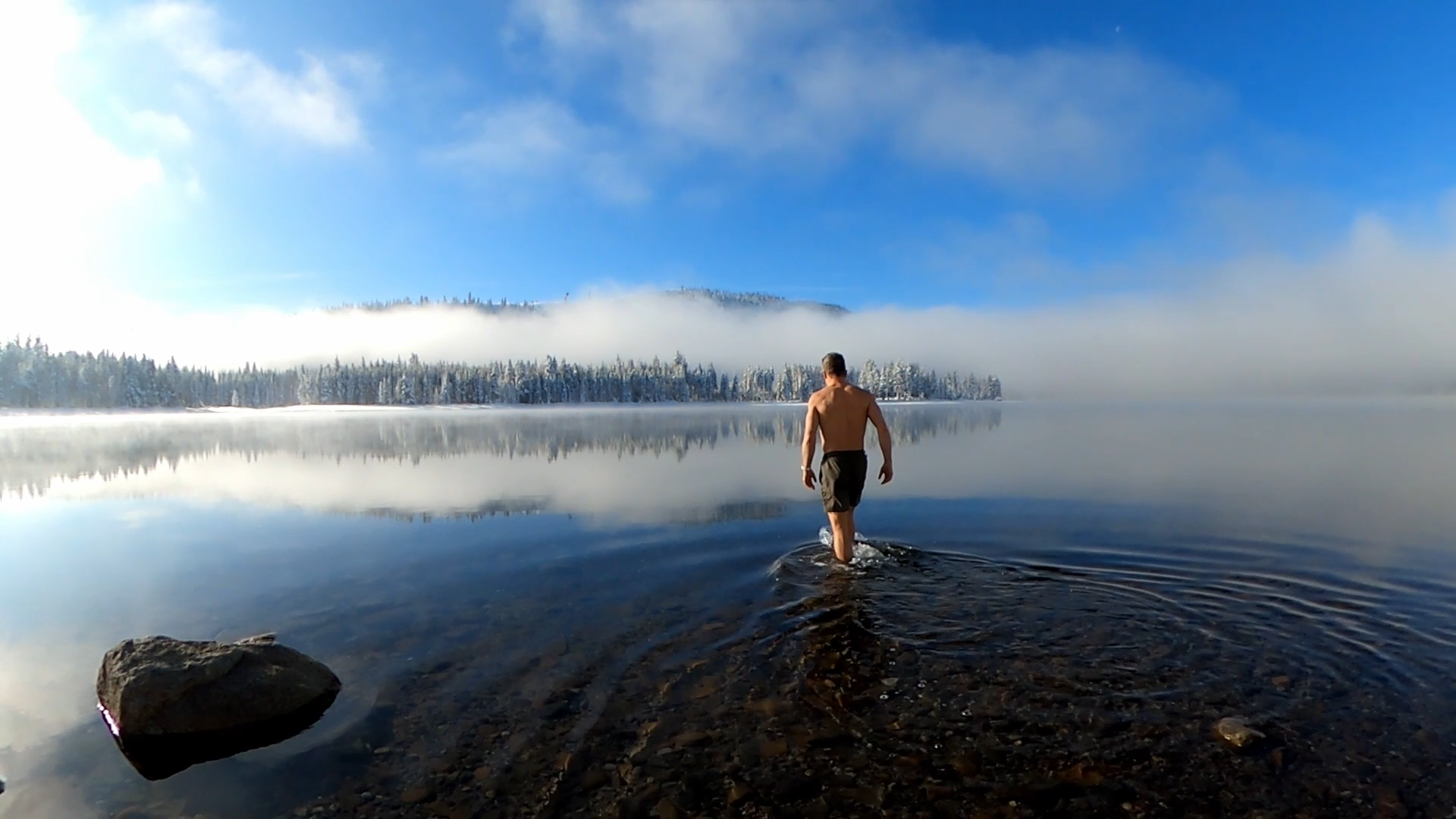
This post is narrated in this YouTube video: Keeping our cold seat In standard meditation practices, a common instruction is to “keep your seat”. People who say they “can’t meditate” are generally saying that they have a hard time staying with the meditation and not aborting after a few minutes. The urge to stop meditating is common and normal, and that’s where the interesting part is. Why can’t we just sit still and be comfortable? The answer is generally that our thoughts and emotions are unpleasant, and that this makes our bodies uncomfortable. It’s also the case that our uncomfortable…
-
Cold water immersion in nature: a therapist’s experience and reflections (Part 1)
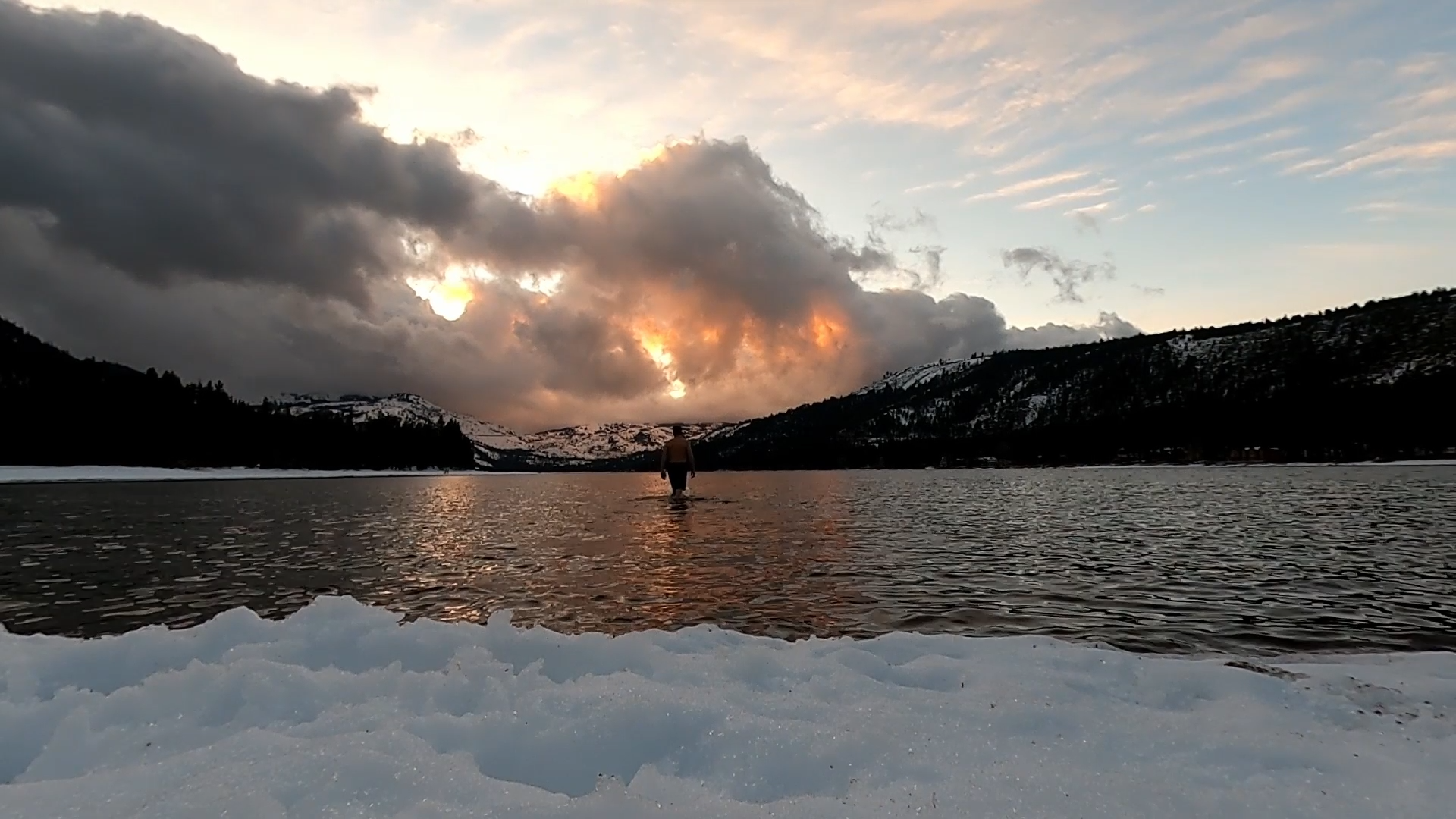
This post is narrated in this YouTube video: Taking the plunge I don’t know exactly why I started getting in cold water three years ago. Carl Jung said that “people don’t have ideas, ideas have people.” And maybe it’s more accurate to say that the idea of cold water immersion found me, as it was circulating through the ethos due largely to Wim Hof’s “missionary” work, more than I found it. I had been hearing personal anecdotes and scientific research on podcasts for a couple of years about the benefits of taking cold showers. I was drawn to the reported…
-

Cutting the strings that bind us (The Free Oscar Project)
Oscar first introduced himself to me on a beautiful sunny day in the early and snowy winter. I was struck by how close he came to me, and how he seemed small and conspicuously alone. In retrospect, at the time, it felt a bit like looking in a mirror-perfect reflection of a calm lake. A friend later told me that he likely had been abandoned by his flock, since Canadian Geese are usually social animals. I didn’t know if that was true, but the possibility wrenched my heart.
-
The courage of investing in a new relationship
This post is the text of a video essay I’ve hosted on YouTube here: Most adults have been hurt in romantic relationships in the past. When we’re young and naïve, we often dive headfirst into a commitment, fueled by the power of romantic love. And then for a variety of reasons, be they some combination of incompatibility, lack of generosity, undeveloped compassion and empathy, long distance, sudden or major life stressors, or other reasons, the relationship doesn’t last, and we experience the heartbreak that is normal for a human being to have after intertwining our heart with another’s, and then…
-

Imago couples therapy
“When we were babies, we didn’t smile sweetly at our mothers to get them to take care of us. We didn’t pinpoint our discomfort by putting it into words. We simply opened our mouths and screamed. And it didn’t take us long to learn that, the louder we screamed, the quicker they came. The success of this tactic was turned into an “imprint,” a part of our stored memory about how to get the world to respond to our needs: “When you are frustrated, provoke the people around you.” Harville Hendrix Imago couples therapy is a theory co-created by therapist…
-

Psychodynamic therapy
“Give me a child until he is seven and I will show you the man.” Aristotle Psychodynamic therapy and psychoanalytic therapy are sometimes used interchangeably, as there is more overlap than difference between them. One distinction is that psychoanalytic therapy is highly associated with Freud and his contemporaries, whereas psychodynamic therapy may be more associated with “neo-Freudians” who came afterward, such as Karen Horey, Alfred Adler, Erik Erikson, and Harry Stack Sullivan. Freud / psychoanalysis emphasized that human anxiety happens when needs (he called “drives”) were unfulfilled. Freud emphasized sexual and other biological drives/needs and outlined “stages of psychosexual development.” Neo-Freudians emphasized the need of…
-
How to journal therapeutically
Therapist’s log Twelve years ago, I found myself starting to journal seriously for the first time. I’d started journaling a few times before but it didn’t stick for long. Perhaps I was too busy soaking in experience as a teenager and twenty-something often does. But at 30 years old, the intersection of a painful breakup, a Master’s psychology literature review called “Why Is Expressive Writing Effective?”, and three decades of accumulated life experience that were ripe for the processing, all compelled me to start a regular journaling practice. At least it started fairly regularly. Well, it might have been a…
-

Everything is practice
“The purpose of life is to be defeated by greater and greater things.” Rainer Maria Rilke For just about all of us, every day brings some disappointment, even if small, if we look at our thoughts closely enough. I will go out on a limb and say that there has never been a single day for anyone that didn’t contain at least one word or action that the imagination couldn’t modify to make it a little bit better. This is the central issue that creates suffering. We live our life, doing the best we can. If it wasn’t for this…
-
The biggest obstacle to meditation
“We are kept from our goal not by obstacles but by a clear path to a lesser goal.” Robert Brault We see the advice everywhere. Health maintenance organization brochures feature short articles on meditation for better mental health. We are shown pictures of healthy looking people sitting in a lotus position with peaceful facial expressions and eyes closed, an ever slight smile on their lips as they bask in magical meditation pleasure underneath rays of sunlight, cast down upon them in an idyllic nature setting in perfect weather. I am glad meditation is being suggested more and more. If it…
-
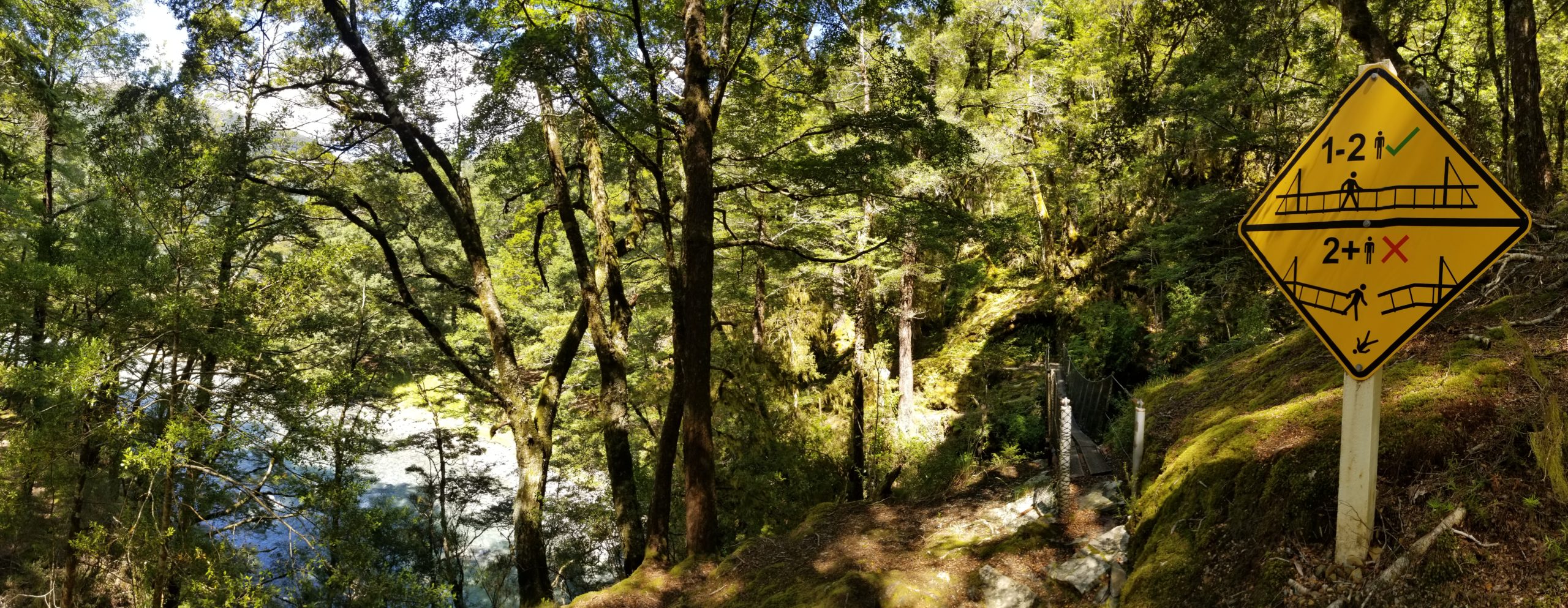
How to stop ruminating
“One can choose to go back toward safety or forward toward growth. Growth must be chosen again and again; fear must be overcome again and again.” Abraham Maslow Rumination, the way I’m defining it here, is a state of overthinking that tends to accompany depression and/or anxiety. Advice I sometimes give to clients is to allow themselves to experience and lean in to their emotions. This can sometimes seem like bad advice, because there are ways of getting lost in our experience that feel emotional, but are also an avoidance of other emotions. One of these ways is rumination. Rumination…
-

Narrative Therapy
Narrative Therapy is a type of psychotherapy that was originally coined and created by Michael White and David Epstein from Australia and New Zealand respectively, and has been developed and shaped by many others (e.g., Steven Matigan, David Nylund, Jeff Zimmerman, and others) over the past several decades. My favorite and most influential professor in graduate school was very enthusiastic about Narrative Therapy at the time our paths crossed, which made Narrative Therapy a significant influence on my development as a therapist. In the decade since then, my interests have meandered among many other theories, but I believe that…
-
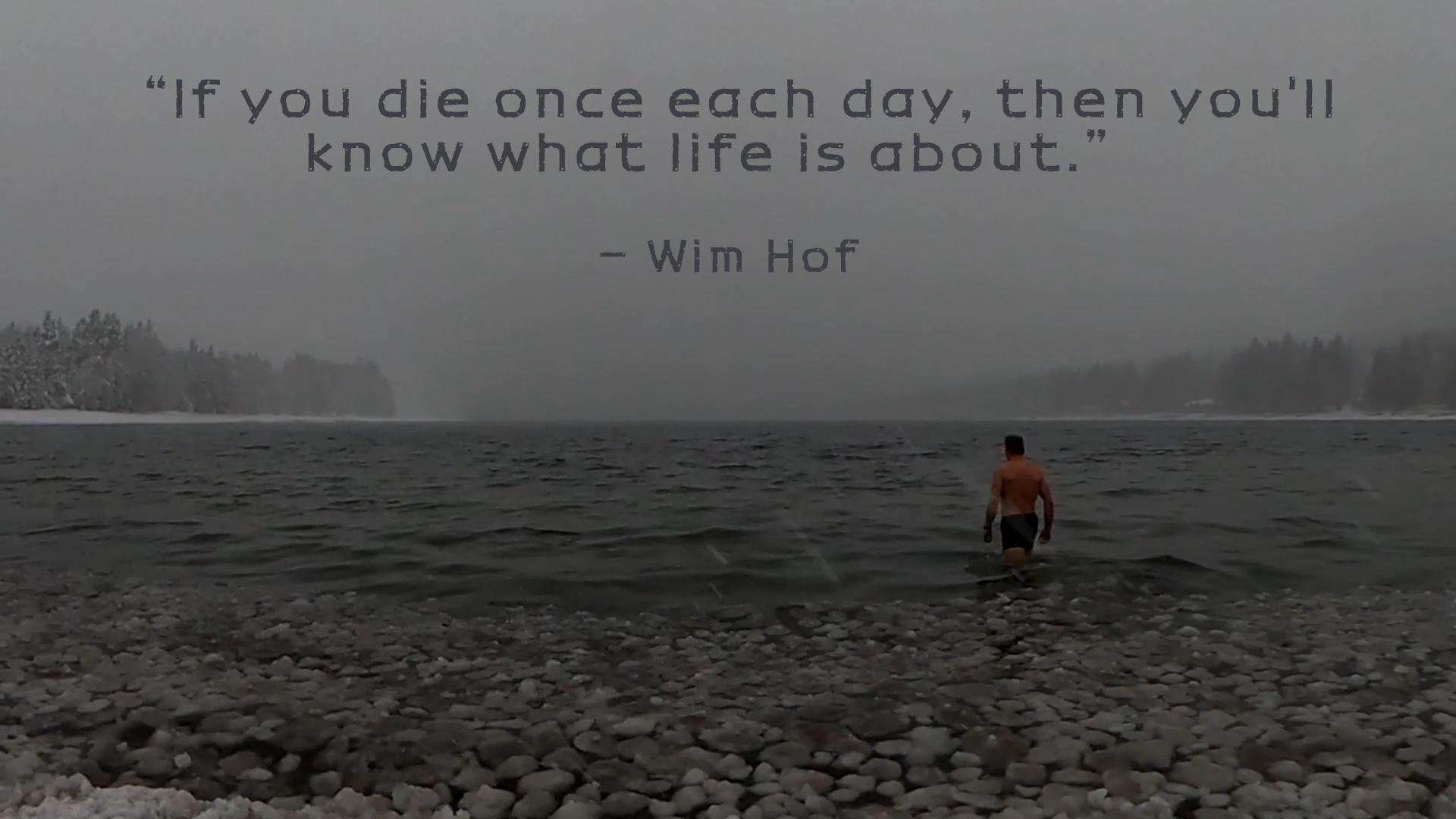
Corrective experiences from fear facing
“If you die once every day, then you’ll know what life is about.” Wim Hof Preface The fear I faced in this story involves spending time in very cold water. Not everyone is into this, and probably not every can do this safely (although probably more people can than think they can). The success of fear facing isn’t about the objective difficulty of a task (e.g. climbing Mt Everest is more difficult than climbing a 3k meter mountain). One person’s ultramarathon could be less scary than another person’s 5k. In that case, the one doing the 5k is facing more…
-
Balance
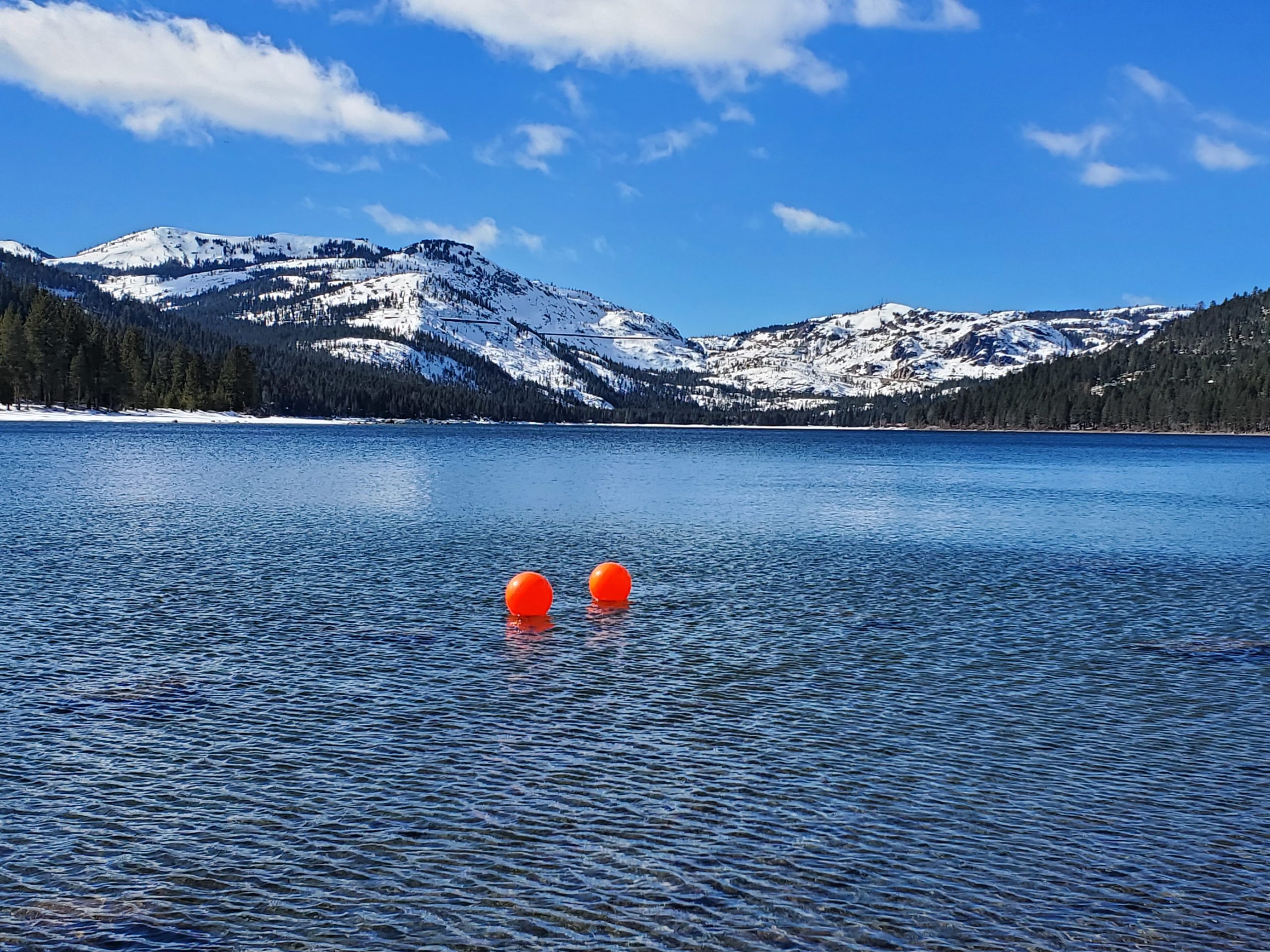
As a metaphor for emotional regulation, I’ve been thinking about the simple image of balancing on top of a ball lately. The one in my imagination looks like one of those rubber fitness balls that people do ab crunches on at gyms. I’m sometimes visualizing standing on it, sometimes sitting. The image came to me during a long meditation in which I was noticing that many of my thoughts seemed to take me away from my body sensations. I would be focused on my body, noticing an ebb and flow between inner-ease and mild anxiety, like waves washing onto the…
-
Humanistic Therapy
If all the theories I draw from were like different sections of an orchestra or band, perhaps humanistic therapy would be the percussion section – always present in the background, keeping the rest of the sections on beat and serving as the foundation of the performance. This is because humanistic therapy more than any other theory emphasizes the therapeutic relationship over techniques or concepts, and all therapy techniques take place within the therapy relationship. I am borrowing heavily from Carl Roger’s work in this post, but other well-known therapists who could be considered classified largely as humanistic therapists include Rollo…
-
The broken toe (pre-existing wound) and the toe step (the trigger)
This is a metaphor that I sometimes share with clients. It comes up when people are trying to make decisions about whether they should move toward something or away from it. They are feeling some emotional pain, but feel confusion about whether or not they should remove themselves from a situation (e.g. relationship, work situation, friendship) around which they feel the pain. Why would they feel confusion? If it’s causing them pain, they’d simply be wise to leave, right? What’s going on is that there is an inner conflict between a protective part of us and an open part of…
-
Acceptance and Commitment Therapy (ACT)
“Our medications are anti-depressants, or anti-anxiety, as if the only sensible goal is to subtract them. Our disorders are called “mood disorders” or “thought disorders” or “anxiety disorders”—once again feeding a cultural view that is often outright hostile to anything painful. We’ve got to put aside this unhelpful messaging to create some space to try truly new things.” Steven Hayes Introduction Acceptance and Commitment Therapy, pronounced “ACT” (as in action) was created by Steven Hayes. I often think of ACT as closely related to Cognitive Behavioral Therapy but with the addition of Eastern philosophical ideas such as acceptance and mindfulness. …
-
Are we “doing” anything while meditating?
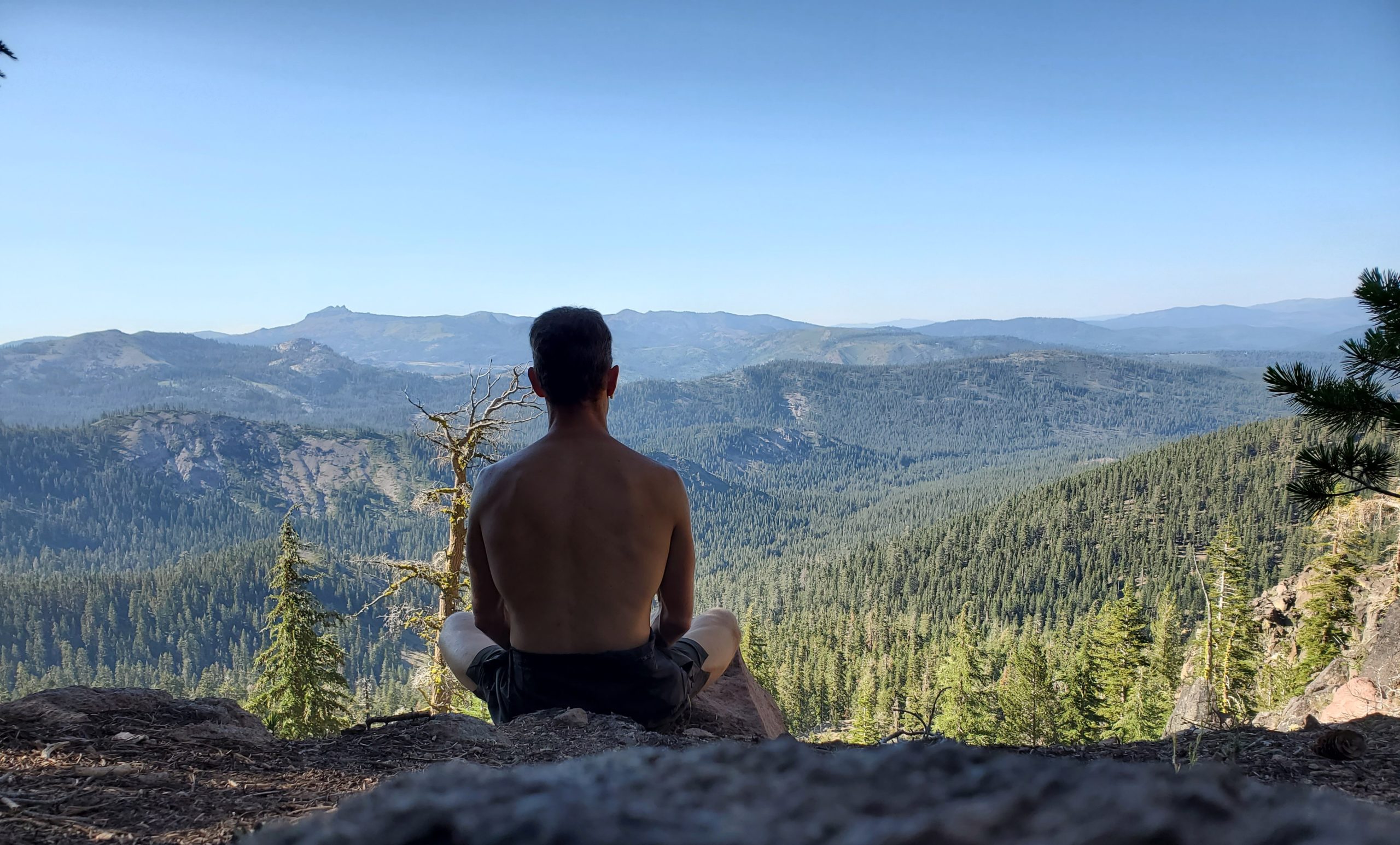
I have been paying attention to what makes a meditation feel successful. A few metaphors have come up for me when I think about what this feels like. Exercise I had a discussion with friends about this, in which I compared meditation to exercise as follows: When we are sitting in the right posture but totally lost in thought, it’s like being at the gym hunched over our phone, sitting on a bench, not doing any exercise. When we wake up and realize we’ve been off track and come back to the present, it’s like doing a rep of an…
-

What function does the addiction serve? An exercise
We all have addictions. One way I sometimes look at life is a process of eliminating addictions so that we can be at peace. If we were all 100% addiction free, we’d be blissful simply sitting still and doing nothing most of the time, and also blissful when we take care of business (eating, sleeping, working, etc). Because most of us most of the time assume that life is just hard and stressful by default, we don’t realize that we even have addictions, which I might define as compulsive behaviors and thought/emotion patterns that we frequently and automatically employ to avoid…
-

Exploring new trails
A couple of days ago I was on a familiar running route that I’ve done dozens of times over the past year… through a park, down a dirt road, across a river, up some switchbacks, down another dirt road… it’s like my gym routine. Get in, do the routine, get out. Rinse and repeat. I like routines, and they’re very important for creating stability and consistent growth. But sometimes they get stale. A personal trainer is probably going to keep switching up workouts for their clients, not only to keep the client’s body from becoming too adapted to the workout,…
-
Cognitive Behavioral Therapy (CBT)
“There is nothing either good or bad, but thinking makes it so.” Shakespeare Cognitive behavioral therapy is based on the central idea that you can change your life, and feelings about life, by changing your thoughts and behaviors. Our thoughts, feelings, behaviors, and circumstances are interdependent, each one affecting the other. Cognitive behavioral therapy is typically aimed at altering thought (cognitions) and action (behavior) directly, to create change. It is based on the assumption that is easier and more effective to change our thoughts and our behaviors directly than to change our feelings or life circumstances directly. CBT Concepts Automatic…
-

Watching experience as if it were a film
The other day I was jogging / hiking and listening to an audiobook. Or maybe it was a podcast. I don’t remember, and that is telling. It was just noise in my ears, not quite reaching my brain. Occasionally some sentence would register meaning, but mostly it was like an annoying fly buzzing. A nuisance. I switched books, or podcasts; I don’t remember. Same feeling. I probably switched several times before reluctantly disconnecting the wireless earbuds from my phone and putting them away in my home-sewn waist pack. “Looks like it’s just you and me, brain,” I thought. A more…
-
Look around for the untasted juicy fruits
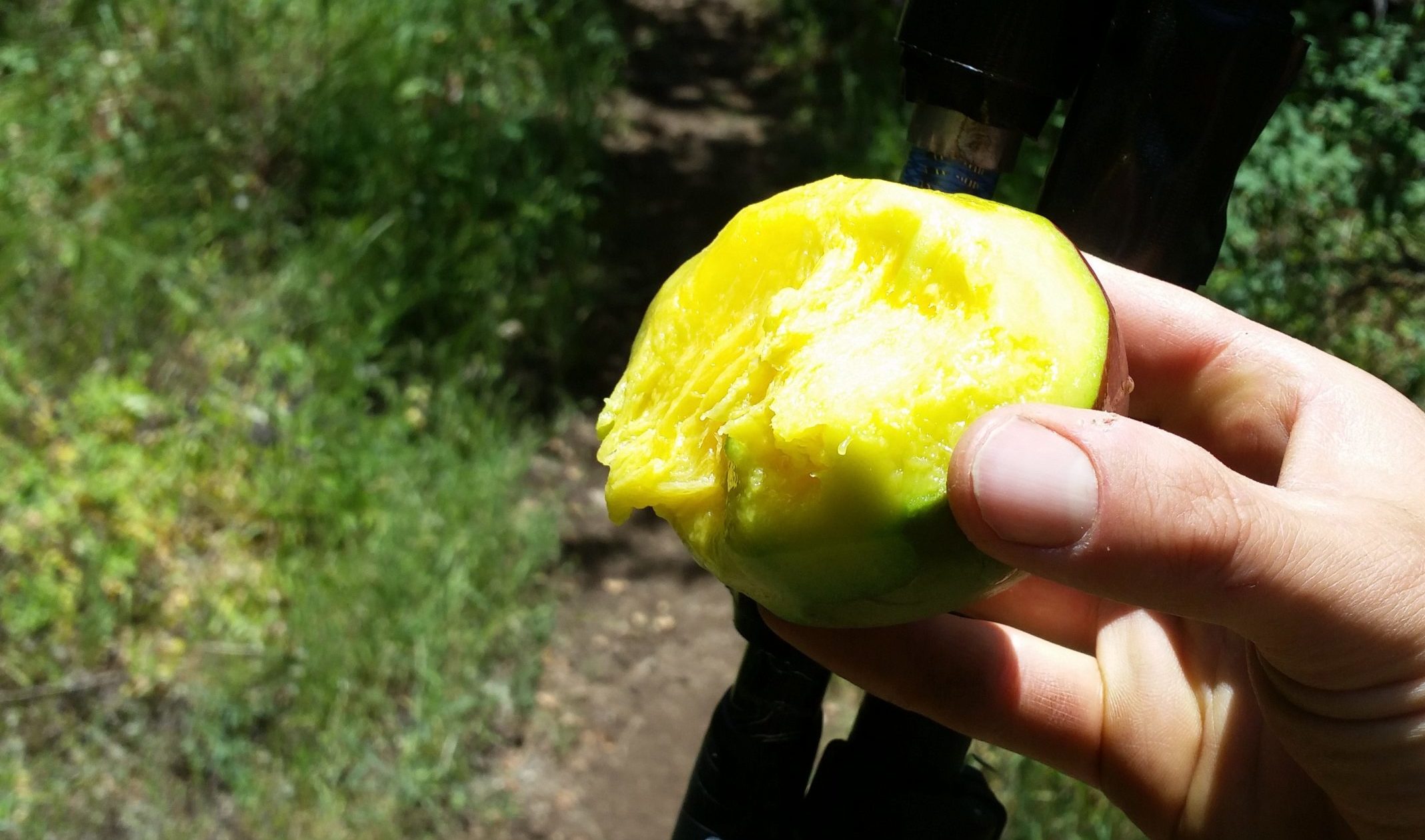
We tend to get fixated on what we want as a means of obtaining happiness, or peace, or joy, or whatever noun you prefer to indicate that state that we’re all ultimately after. If a billionaire suddenly believed, deeply believed, that money created misery, he would give all of his money away quickly. But we tend to think that money, or the right partner, or having a certain home, or the right body, or the right job or social status will finally deliver us from our existential angst. But by making our means to joy so specific, we create a…
-
The strength to part ways
“I do my thing, and you do your thing. I am not in this world to live up to your expectations, and you are not in this world to live up to mine. You are you and I am I. And if by chance we find each other, it’s beautiful. If not, it can’t be helped.” (The Gestalt Prayer) Fritz Perls I first saw this poem in a book by Fritz Perls, the creator of Gestalt Therapy, perhaps 6 or 7 years ago. It immediately struck me as important. I know this because I remember about what year it was…
-
The foundation for conflict resolution
“Human beings draw close to one another by their common nature, but habits and customs keep them apart.” Confucius Every so often, a client will bring up fears or anger surrounding politics. Jonathan Haidt’s writing elucidates the strong human tendency to be tribal, especially in his book, The Righteous Mind, which I found really helpful in making peace with the fact that political division exists. He argues that our success in evolution due to hyper-social cooperation came at the cost of mistrust of other tribes. I sometimes think of the TV series “Lost” in which the viewers were introduced for two…